
Share:
Copy link
Copied!

Meticulous preparation before a game, match, or meet is imperative for success; however, after the x’ and o’s have been outlined, the all-important pre-game speech by the coach has become an essential part of that process. With time to prepare the coach can carefully craft and articulate their words with pauses that produce a powerful silence coupled with an ecclesiastical inflection to emphasize emotional stories that remind players of their mission. How many coaches truly spend time preparing what to say after defeat?
Pregame and Post game speeches are quantitatively different. The pregame is done with a rational mind free from the emotion of the game. Conversely, the post-game speech, especially following a tough loss, can be filled with an avalanche of emotions. How and what the coach says can have reverberations for the duration of the season. The speech in its entirety is important, but how you begin and end will hold the most weight! Sometimes, the most important speech may not be at the beginning of the competition, it may come after a loss.
It is important to think about some questions before speaking with a team after a loss:
What does my team need to hear right now?
Where am I speaking from? Emotion or purpose?
Will this talk help us move forward?
Before having this talk, coaches must remember that all losses are not the same. Likewise, the message should also match the age and context of the athletes. To help navigate the conversation, coaches can use the framework, A.I.M.
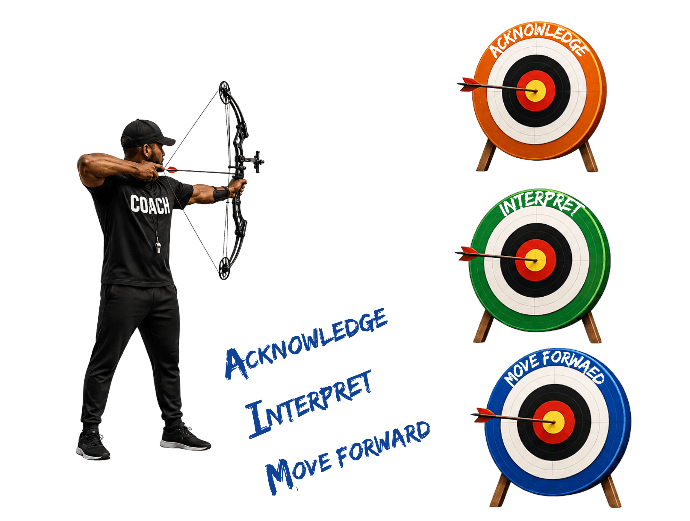
A: Acknowledge
You first want to regulate your own emotions toward the loss but also the feelings of the players and the result your team experiences.
Example: “I can understand that this loss hurts you all, it hurts me as well”
I: Interpret
Take personal accountability for the loss and help make sense of what happened within the competition. Maybe focus on one or two takeaways.
Example: “I will own my part in the loss; we also have been working on our responses when things do not go our way in the game”
M: Move Forward
The coach should end on a good note with some directions to help the team continue on.
Example: “One loss does not define who we are, we will reset and continue to work hard tomorrow together”
Remember, a loss isn’t what defines the team and their performance. It is usually the response to the loss. A speech cannot erase emotions after a loss but the right words can be influential in the next opportunity.
Published:


